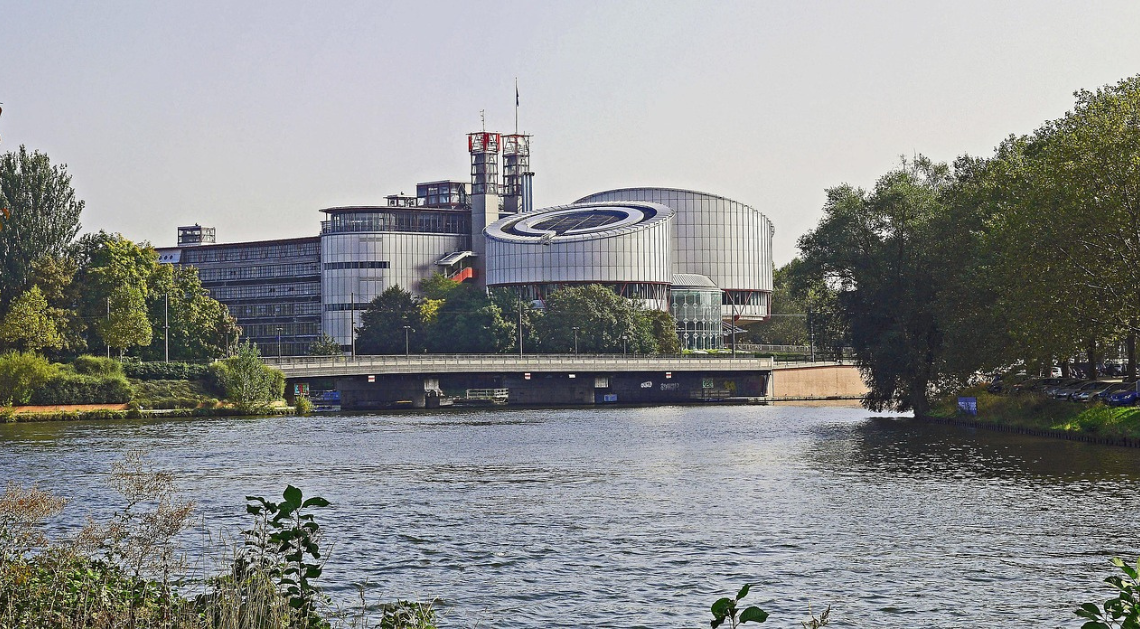
The European Court of Human Rights further clarifies States’ climate obligations in landmark judgment on Arctic oil licences
Last month, the European Court of Human Rights (the Court) issued its judgment in the case Greenpeace Nordic and Others Youth vs Norway. This clarified how States’ human rights obligations relate to fossil fuel production and climate change. While it found no violation of Article 8, the Court reaffirmed that States must conduct environmental impact assessments that account for cumulative and global emissions and ensure meaningful public participation. In its third-party intervention, ENNHRI urged the Court to recognise States’ duty to prevent foreseeable human rights harms arising from fossil fuel development.
What is the case about?
The case was brought by Greenpeace Nordic, Nature and Youth, and six young individuals. They argued that Norway violated their rights to life and to private and family life (Articles 2 and 8 of the European Convention on Human Rights) by permitting new oil and gas exploration in the Arctic without assessing the full climate impact. They also alleged discrimination under Article 14, particularly affecting Sámi people, youth, and children.
Extension of state obligations to exported emissions
On the substantive obligations under Article 8, the Court expanded the scope of States’ human rights obligations identified in Verein Klimaseniorinnen Schweiz and Others vs Switzerland judgment to cover emissions resulting from exported oil and gas. Consistent with ENNHRI’s intervention, the Court held that fossil fuel licensing decisions have a “sufficiently close link” to climate-related risks to individuals. This means they fall within the scope of Article 8.
Procedural obligations and environmental impact assessments
Regarding procedural obligations, the Court reaffirmed that environmental impact assessments are essential before decisions with significant environmental effects are taken. This includes oil and gas licensing. ENNHRI had underlined that the public’s right to information must apply from the earliest stages of decision-making. Although it shared reservations about Norway’s approach of postponing such assessments, the Court ultimately accepted its approach while cautioning against its potential shortcomings.
Recognition of the standing of environmental organisations
While the Court found that individual applicants lacked standing, it confirmed that environmental organisations could act on behalf of individuals at risk of climate-related harms. This follows the criteria established in Verein KlimaSeniorinnen Schweiz and Others v. Switzerland. These require that the organisation be lawfully established in its country, pursue the protection of human rights against climate threats, and be genuinely qualified to represent affected individuals. However, these do not require the organization to be membership-based.
Implications for future climate and environmental litigation
The judgment could majorly impact both future and ongoing climate-related cases, particularly concerning requirements for impact assessments for petroleum licences. However, the judgment stops short of defining the precise conditions under which States are legally required to refuse or revoke fossil fuel licences in light of human rights obligations.
ENNHRI and its members will continue contributing legal and human rights expertise to strengthen the recognition and enforcement of climate-related human rights obligations across Europe in line with the European Convention on Human Rights and the principles affirmed by the Court.
The full picture – ENNHRI’s work on the case and climate change and human rights
The Norwegian National Human Rights Institution led the drafting of ENNHRI’s third-party intervention, with support from ENNHRI’s Legal Working Group and Working Group on Climate Change and Human Rights.
Read ENNHRI’s third-party intervention in the case.
Learn about ENNHRI’s work on climate change and human rights.
More articles
![ENNHRI calls on Council of Europe to introduce binding instrument on the right to a healthy environment and more civic space protection]()
ENNHRI calls on Council of Europe to introduce binding instrument on the right to a healthy environment and more civic space protection
![Corporate Sustainability Due Diligence Directive adopted by Council of the EU]()
Corporate Sustainability Due Diligence Directive adopted by Council of the EU
![Trees in a sunlit forest, with light coming through a dense green canopy]()
ENNHRI repeats call for a binding Protocol to the European Convention on Human Rights to recognise the right to a healthy environment